Teenytown
Doctor SleepTeenytown is a miniature version of Frazier’s Cranmore Avenue, set on the town common and organized around a railway whose route runs from the attraction to Cloud Gap and back. It is at once a family recreation site, a seasonal workplace, and an unexpectedly charged place in the lives of Dan Torrance and Abra Stone: Dan sees it as a possible foothold when he arrives in town, while Abra remembers seeing ghostly passengers aboard its train as a young child.
Setting and miniature town
Teenytown sits across from Frazier’s municipal building, on a common that also has a bandstand, softball field, paved half-court, picnic tables, and putting green. A sign presents the attraction as Frazier’s small wonder. Its miniature Cranmore Avenue reproduces recognizable local businesses and civic landmarks: a Methodist church, the Music Box Theater, Spondulicks Ice Cream, Mountain Books, Shirts & Stuff, and the Frazier Gallery. The church’s steeple rises only seven feet, making the scale of the replica part of its appeal.
The miniature also includes a waist-high model of Helen Rivington House, the single-turreted hospice. The two brick buildings that flank the real institution are omitted. For Dan, who compares their appearance unfavorably with the centerpiece, the omission makes the miniature’s choices visible: Teenytown is not simply a reduced copy of the town but a selective rendering of it. The attraction puts the hospice into the same small civic landscape as shops, recreation, and public buildings.
The railway and seasonal work
The railway is Teenytown’s defining moving feature. Its passenger cars are built for very small riders, while its locomotive is disproportionately large, about the size of a touring motorcycle. The engine bears the name The Helen Rivington. Dan takes this as a possible sign of the hospice’s standing in Frazier, though he only speculates that a street may also be named for it. The railway’s loop extends ten miles to Cloud Gap and back.
Teenytown is also part of the town’s summer economy. In Dan’s first spring visit, tarps still cover much of the common’s seasonal equipment, including stands and a carousel, and the cold weather makes the attraction seem not yet fully open. The local municipal department expects to hire school-age residents when summer arrives; its employer, Casey Kingsley, generally hires young local workers for Teenytown because the selectmen expect it and their labor is inexpensive. Dan considers the possibility of work there, but recognizes that remaining sober and proving trustworthy would matter if he hoped to be allowed to drive the train.
The train’s controls give the attraction a practical, workaday side. When Dan examines the locomotive, he sees two sheepskin-covered bucket seats, controls that appear adapted from a car, and a raised Z-shaped shifter. The steering wheel has been cut down to a yoke, and the dashboard carries a faded warning that the top speed is forty. A municipal worker approaches with a toolkit, establishing that the railway is maintained as public equipment rather than merely displayed as a model. The contrast between miniature passengers and full-sized machinery helps explain why Dan finds the engine compelling.
Dan’s connection to Teenytown
When Dan arrives in Frazier by bus, he is looking for work and for somewhere he might begin to set his life right. He pauses at Teenytown, where the miniature town and railway catch his attention. As a child, he had wanted an electric train set and never had one; the attraction offers a much larger version of that unrealized wish. His interest is not only practical. It gives him a specific, ordinary pleasure to imagine returning to, at a time when he is trying to determine whether he can stay in Frazier at all.
Teenytown also becomes the setting for a relapse. After lying awake through the night, Dan returns to the Red Apple, buys three bottles of wine, and takes one to the common. He sits on a bench in Teenytown and looks at the bottle before opening it. The location that had suggested a possible fresh start is thus also present when he returns to drinking; its promise does not protect him from the habit he is trying to escape.
Dan’s employment with the Frazier Municipal Department is brief, but his association with the attraction continues through his friendship with Billy Freeman. About ten years later, Dan brings Billy coffee at the station, where Billy is polishing the locomotive. Their friendship rests partly on their shared connection to Casey, who is Billy’s boss and Dan’s sponsor, and partly on their uncomplicated liking for each other. Dan enjoys Billy’s directness and the chance to drive the train. In summer, between the Fourth of July and Labor Day, the railway completes its ten-mile loop ten times a day; Billy often hands over the controls, especially as the work grows tiring. The common’s evening activity—families using the playground, frisbees in the air, and a softball game—makes the place feel to Dan like a possible home, if not a perfect one.
Abra’s vision and the railway’s significance
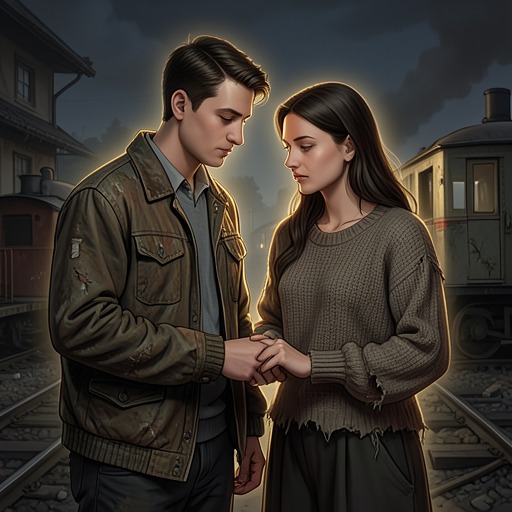
Teenytown’s railway also enters the story through Abra Stone’s childhood memory. When she is four, she tells her parents, Lucy Stone and David Stone, that she has seen ghostly people riding The Helen Rivington. She describes recognizing them as dead because their faces looked like old apples and moonlight showed through them. The sight is a remembered vision, not an ordinary outing: when Lucy later asks Concetta Reynolds whether she had taken Abra on the train, Concetta says the train was being repaired on the day they visited Teenytown, so they rode the carousel instead.
That discrepancy gives the railway a significance beyond its role as a local attraction. For Dan, its miniature scale and familiar machinery invite thoughts of work, childhood pleasure, and the possibility of belonging. For Abra, it is bound to an encounter with the dead that she could not have acquired from riding the train that day. Teenytown therefore holds two sharply different kinds of promise: a mundane route that carries visitors out to Cloud Gap and back, and a remembered passage through which the ordinary world briefly appears open to the supernatural.